
Keep your family out of probate, and your affairs private
When someone dies with only a will, their home and savings usually go through probate: a court process that takes time and puts the details on the public record. A revocable living trust lets those assets pass straight to the people you choose. Hoy & Hoy Law sets up and helps fund trusts for families throughout Baltimore County and Harford County, from Perry Hall to Bel Air.

You stay in control, and your family avoids the court
With a revocable living trust, you move your home and accounts into the trust's name while you're alive. You're usually your own trustee, so nothing changes day to day. You can still buy, sell, move money and change your mind about any of it.
The difference shows up when you can't act. If you become seriously ill, the successor trustee you've chosen steps in and manages things without anyone going to court. When you die, the trust's assets pass to your beneficiaries under its terms, privately and usually much faster than probate allows. You can also decide when they receive it: all at once, or in stages as they get older.
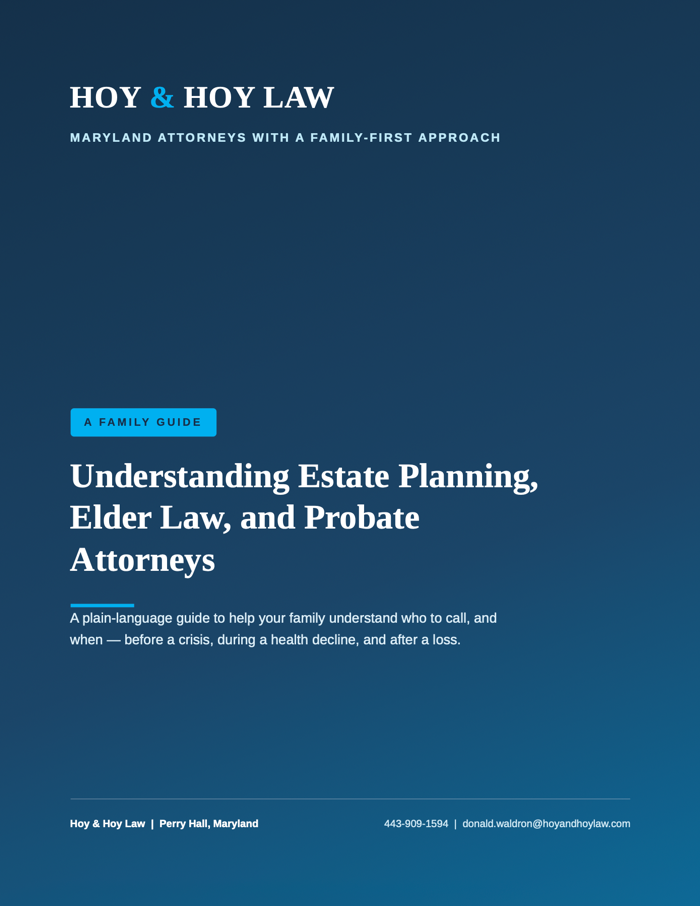
Free family guide: Not sure whether you need an estate planning, elder law or probate attorney? Our plain-language guide explains who to call, and when.
Who a trust tends to suit
- You own a home, especially if it's paid off or nearly so
- You own property in more than one state
- You'd rather your family's affairs didn't become public record
- You want someone to be able to step in if you become incapacitated
- You have children from a previous relationship, or a blended family
- You'd like an inheritance released in stages rather than all at once
- You own an LLC or a share in a business
A trust only works if it's funded
A trust controls only what's in its name. The most common way trusts fail is that the paperwork is signed but the house and accounts are never moved into it, so they go through probate anyway. We prepare the deed for your home, give you clear instructions for retitling each account, and check that your beneficiary designations fit the plan. A pour-over will comes with every trust, to catch anything left outside it.
About living trusts
- Do I lose control of my assets?
- No. With a revocable trust you're usually your own trustee, free to buy, sell, change beneficiaries or cancel the trust entirely while you're alive and well.
- Does a revocable trust protect my assets from nursing home costs?
- Generally no. Because you can revoke it, a revocable trust doesn't shield assets from creditors or long-term care costs. That's a question for an elder law attorney, and we can suggest where to turn.
- Do I still need a will if I have a trust?
- Yes. A pour-over will moves anything you didn't put into the trust during your lifetime into it at your death. It's part of every trust we prepare.
- What happens to my house?
- Your home is deeded into the trust and you go on living there exactly as before, paying the mortgage, taxes and insurance. When you die, your successor trustee transfers or sells it under the trust's terms, without probate.
- Can a married couple share one trust?
- Yes, many do. Separate trusts can make more sense in second marriages, or where each spouse has different beneficiaries in mind.
This page is general information about Maryland law, not legal advice for your situation.
Keep exploring
Thinking about a trust?
Tell us about your home, your family and what you'd like to happen, and we'll tell you whether a trust makes sense for you.